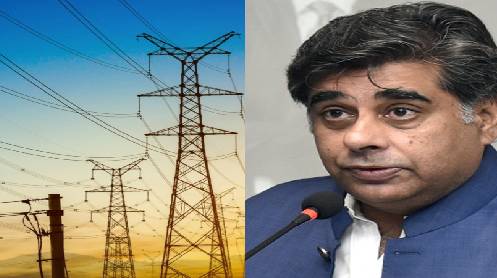
LAHORE: Former caretaker commerce minister Gohar Ejaz has attributed Pakistan’s ongoing power crisis to systemic governance and management failures, rather than a lack of installed generation capacity.
In a statement shared on X, Ejaz noted that despite an installed capacity of 46,605 megawatts (MW), the country continues to experience widespread load shedding. Industrial consumers face outages of 2–4 hours, while domestic and commercial users endure up to 16 hours of electricity cuts in some areas.
He highlighted a significant gap between capacity and actual supply. At a peak demand of 20,520 MW, electricity generation stood at only 13,958 MW—resulting in a shortfall exceeding 4,000 MW.
Ejaz identified several structural inefficiencies behind the crisis, including the non-operational status of the Neelum-Jhelum Hydropower Project, which has reduced the availability of low-cost electricity, and the underutilisation of gas-based power plants due to inadequate fuel allocation.
He also pointed out that solar generation drops to zero at night when demand peaks, while the absence of sufficient energy storage and effective load management systems further worsens the situation. Additionally, transmission bottlenecks limit the ability to deliver available electricity to key demand centres.
Criticising the current system, Ejaz said consumers are effectively paying for full installed capacity through tariffs, yet are not receiving reliable electricity supply when it is most needed.
“The gap between what we have and what we deliver is not an engineering issue—it is a governance and management failure,” he said, calling for improved fuel planning, efficient dispatch mechanisms, stronger grid coordination, and enhanced financial discipline across the power sector.